Eco-Friendly Parking: Sustainable Solutions for Urban Areas
Urbanization across Texas, particularly in Austin and Dallas, continues to increase demand for parking infrastructure. But with rising concerns about climate change, urban heat islands, and flooding, cities must shift toward more sustainable parking strategies.
This blog explores innovative eco-friendly parking solutions for Austin and Dallas—highlighting materials, designs, and planning approaches that reduce environmental impact while supporting growing city needs.
Traditional Parking Infrastructure
Traditional parking contributes heavily to pollution, excess heat, and water management issues in cities. Large, paved surfaces increase runoff and elevate surrounding temperatures, adding to local and global environmental pressures.
Let’s look at the deeper impacts of outdated parking designs on city life and climate resilience.
How Asphalt Parking Contributes to Urban Heat Islands
Asphalt and other dark paving materials absorb sunlight and radiate heat, significantly raising surrounding air temperatures. This creates urban heat islands, particularly in areas with large parking lots in Dallas TX and public parking in Austin. These temperature spikes lead to increased energy use, higher cooling bills, and health risks. In hot cities like Austin and Dallas, mitigating this effect through green parking strategies is critical. Transitioning to light-colored or permeable paving can significantly lower surface temperatures.
Runoff and Water Pollution Concerns
Conventional parking lots prevent rainwater absorption, leading to rapid runoff. This runoff carries oil, chemicals, and debris into nearby drains and waterways, damaging local ecosystems. In flood-prone neighborhoods, the risk of flash flooding increases dramatically. Austin parking garages and Dallas city parking areas without proper drainage or green design contribute directly to pollution. Eco-friendly parking options, such as bioswales or permeable pavements, help absorb rainfall and reduce waterborne contaminants.
Sustainable Parking: What It Means Today
Sustainable parking focuses on environmentally friendly design, functionality, and reduced long-term impact. It is more than just using green materials—it’s about rethinking how we use space, energy, and water within urban infrastructure.
Here’s how sustainable parking systems are defined and why they’re vital for Texas cities.
What is Sustainable Parking?
Sustainable parking refers to eco-conscious infrastructure that minimizes environmental harm and maximizes resource efficiency. It includes design features like permeable pavers, green roofs, solar panels, and EV chargers.
In cities with high demand for public parking in Dallas TX or overnight parking in Austin, sustainable approaches help offset the effects of vehicle traffic and emissions.
These systems promote better air quality, water management, and urban aesthetics. They’re also more resilient to extreme weather events, which are becoming more frequent in Texas.
Why Cities Like Austin and Dallas Must Adapt
Both cities are experiencing rapid growth and vehicle congestion, with new development placing strain on aging infrastructure. To meet sustainability goals, municipalities must rethink traditional parking in Austin and Dallas parking garage designs.
Forward-thinking urban planning that incorporates green parking infrastructure can ease environmental stress while accommodating growth. Investing in green parking also enhances real estate value, attracts eco-conscious developers, and ensures compliance with future environmental regulations. Simply put, adapting is no longer optional—it’s essential.
Eco-Friendly Parking Materials and Technologies
Using the right materials can dramatically reduce the environmental impact of parking. Today’s eco-friendly options provide durability, reduce maintenance, and support water conservation.
Let’s explore three leading solutions that Austin and Dallas can adopt for green parking projects.
1. Permeable Paving Systems
Permeable pavements allow rainwater to seep through the surface and into the soil below, helping recharge groundwater and prevent runoff. These systems are made of porous asphalt, concrete, or interlocking pavers that support weight without blocking water. For public parking Austin TX and overnight parking in Dallas, permeable systems are ideal because they reduce flooding risks and improve drainage. They’re also more effective in extreme weather conditions, making them perfect for urban Texas. Long-term, they lower stormwater management costs for municipalities.
2. Recycled & Low-Impact Materials
Eco-friendly materials like recycled rubber, crushed concrete, or plastic composites are gaining traction in green infrastructure. They not only reduce the need for virgin materials but also lower the embodied energy in parking construction. These are particularly useful in smaller Austin parking lots or Dallas overnight parking areas where lightweight and durable surfaces are needed. Some of these surfaces also support thermal insulation, reducing heat absorption. Plus, they require less frequent repair, decreasing the need for resource-heavy maintenance.
3. Reflective Coatings
Cool pavement technologies reflect sunlight rather than absorbing it, which helps decrease surface temperatures and mitigate urban heat islands. Applying reflective coatings to parking garages in Dallas TX or the parking spot Austin West makes these areas safer and more comfortable. These coatings can reduce pavement temperatures by up to 30°F, leading to improved ambient air quality. Additionally, reflective surfaces increase visibility at night, enhancing safety and reducing the need for artificial lighting. This, in turn, lowers energy use and maintenance costs.
Integrating Green Spaces into Parking Lots
Adding vegetation to parking lots isn’t just decorative—it plays a crucial role in urban cooling and water management. These green features also improve property aesthetics and create healthier public spaces.
Here are two essential landscaping elements to incorporate into eco-parking.
1. Bioswales and Rain Gardens
Bioswales are shallow, landscaped depressions that slow, filter, and absorb stormwater runoff. Paired with rain gardens, they help manage large volumes of water from impervious parking surfaces. These systems are ideal for parking at the Austin Convention Center or near Dallas downtown lots, where heavy foot and car traffic generate substantial runoff. Vegetation in these features also captures pollutants, filters dust from the air, and provides habitat for beneficial insects. Maintenance is low, and costs are offset by reduced flood and drainage expenses.
2. Tree Islands and Landscaping
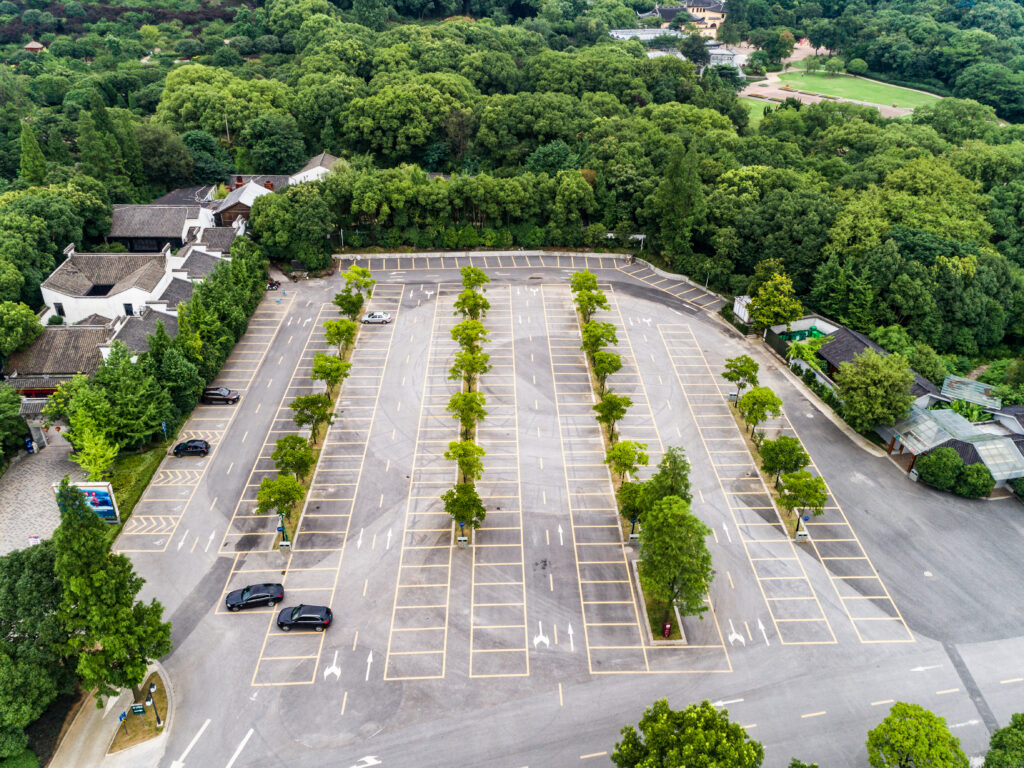
Tree islands are strategically placed clusters of trees and plants within parking lots, designed to break up heat-absorbing surfaces. These green pockets offer shade, lower temperatures, and absorb rainwater. In Texas summers, this makes a major difference for street parking in Austin and Dallas public parking areas.
They also extend the life of vehicles parked underneath by protecting them from UV exposure. In high-traffic areas, they serve as aesthetic enhancements and psychological buffers, reducing the harshness of large, paved spaces.
Shared Driveway Platforms as a Green Alternative
Not all parking needs require large-scale construction. Shared economy models, such as Park-In-My-Driveway, offer flexible, decentralized, and eco-conscious alternatives to public parking.
These platforms unlock unused residential space, helping to reduce land consumption and emissions.
1. Using Existing Residential Spaces
By renting out residential driveways, homeowners contribute to smarter land use without the need for new paved lots. This approach is ideal for visitors needing overnight parking in Austin TX during festivals or events. It also eliminates the emissions caused by circling for public parking in high-demand areas.
Cities benefit by reducing infrastructure strain and pollution hot spots. These spaces are often more affordable and conveniently located for eventgoers and commuters alike.
2. Benefits of Peer-to-Peer Parking
Peer-to-peer parking promotes shared responsibility and urban cooperation. It makes the most of existing paved areas, reducing pressure on city lots like parking at the Dallas Convention Center. The platform also empowers homeowners to earn passive income while promoting sustainable city living.
In neighborhoods with limited commercial parking, this system helps balance supply and demand. It’s a win-win solution for users, owners, and city planners focused on sustainability.
Case Studies of Green Parking Success
Success stories from Texas cities show that sustainable parking is practical, scalable, and effective. From residential neighborhoods to downtown districts, these examples offer a roadmap for green transformation.
Let’s explore how innovative design is already making an impact.
1. Mueller District, Austin
Contact us Mueller’s urban village integrates green infrastructure across commercial and residential parking zones. With permeable pavers, solar covered lots, and abundant landscaping, it sets a new standard for green parking Austin. Residents enjoy cooler temperatures and cleaner air, even in high-traffic areas. EV stations and shared-use lots enhance accessibility while lowering emissions. The project is widely studied and replicated as a model for future city developments.
2. West End Innovation District, Dallas
The West End underwent a green overhaul with features like porous paving, rain gardens, and EV-ready parking stalls. These upgrades have transformed Dallas public parking spaces into climate-resilient infrastructure.
Businesses in the area benefit from improved aesthetics and lower utility costs due to smart lighting and energy-efficient designs. The area now attracts tech firms and sustainable startups. It’s an excellent example of how eco-conscious upgrades can boost economic development.
Conclusion
Eco-friendly parking is no longer a luxury—it’s a necessity for cities facing climate and population challenges. Austin and Dallas are making strides, but long-term progress depends on collective action and innovation.
With smarter planning, greener materials, and community collaboration, Texas cities can lead the way in sustainable urban development.